
GUIDES
The Tabata protocol: what the original study did
Twenty seconds, ten seconds, eight rounds: where the format comes from and what it really asked of people
What the study compared
Over 6 weeks, one group of young male athletes cycled at a moderate 70% of their VO2max for an hour, five days a week. The other did the short, very hard intervals, about 4 minutes of work per session, five days a week 1.
Key study
Four minutes a day improved two kinds of fitness
- Training study
- Young male athletes
- 6 weeks
VO2max rose by about 7 ml/kg/min with the intervals and about 5 ml/kg/min with moderate cycling. Anaerobic capacity, the ability to produce energy without oxygen, rose by 28% with the intervals and didn’t change with moderate cycling.
Source 1Why most Tabata workouts are different
Working at 170% of VO2max is an all-out sprint that leaves trained athletes unable to continue after a few minutes. Most classes called Tabata use squats, burpees or push-ups at a hard but sustainable pace. That’s still good interval training, with the same 20/10 rhythm, but it isn’t the effort the study measured, so don’t expect the same results from it.
How to do a true Tabata
- Choose something you can push all-out safely, such as an exercise bike or a rower.
- Warm up for about 10 minutes.
- Go all-out for 20 seconds, rest for 10, and repeat 8 times.
- Cool down with easy movement for a few minutes.
Sources
- Tabata I, Nishimura K, Kouzaki M, et al. Effects of moderate-intensity endurance and high-intensity intermittent training on anaerobic capacity and VO2max. Med Sci Sports Exerc. 1996;28(10):1327-1330. doi.org/10.1097/00005768-199610000-00018
YOUR NEXT SESSION STARTS HERE
Bring the effort.
We’ll keep the time.
Cero is free to download for iPhone, iPad and Apple Watch.
Download Cero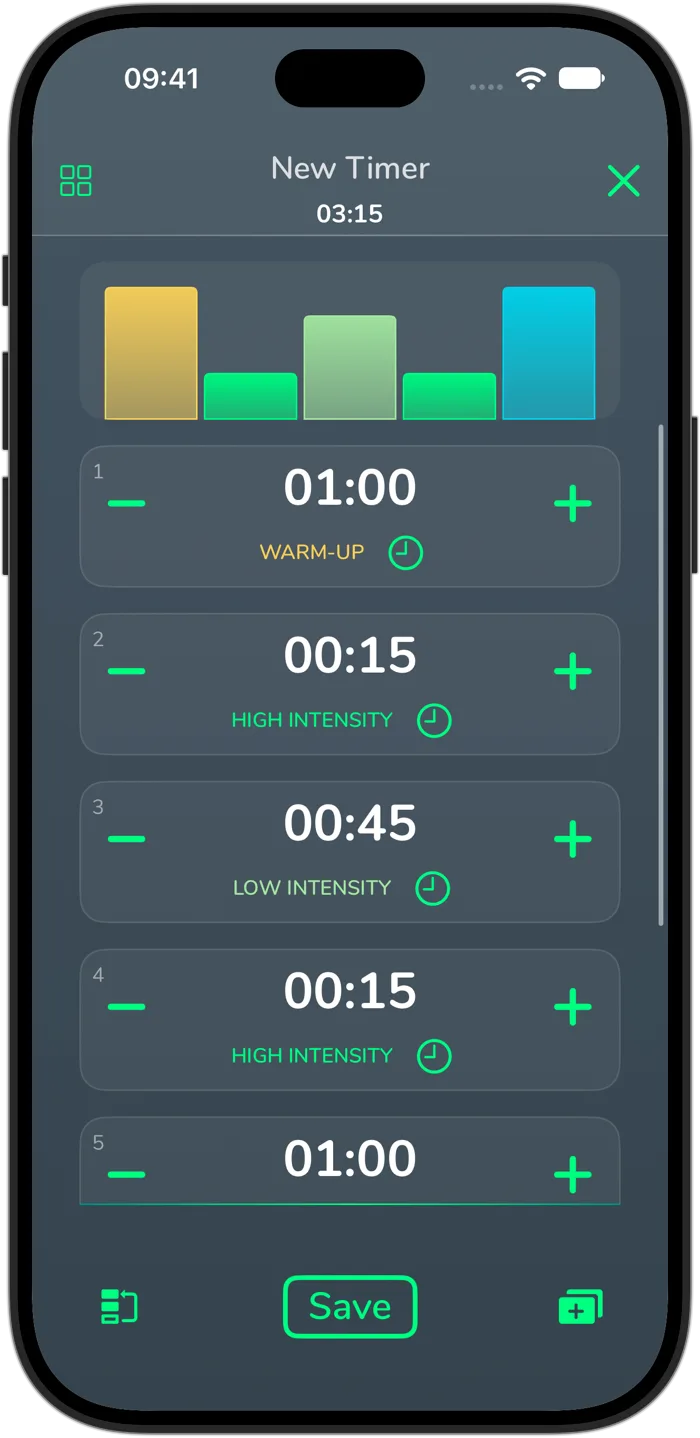
Cero is a timer, not a medical device. If you’re new to hard exercise, are pregnant or have a health condition, check with your doctor first, and stop if you feel unwell.